Welcome to Jinan KingM Machinery Co., Ltd


MOPA Color Laser Marking Machine For Metal Color Mark
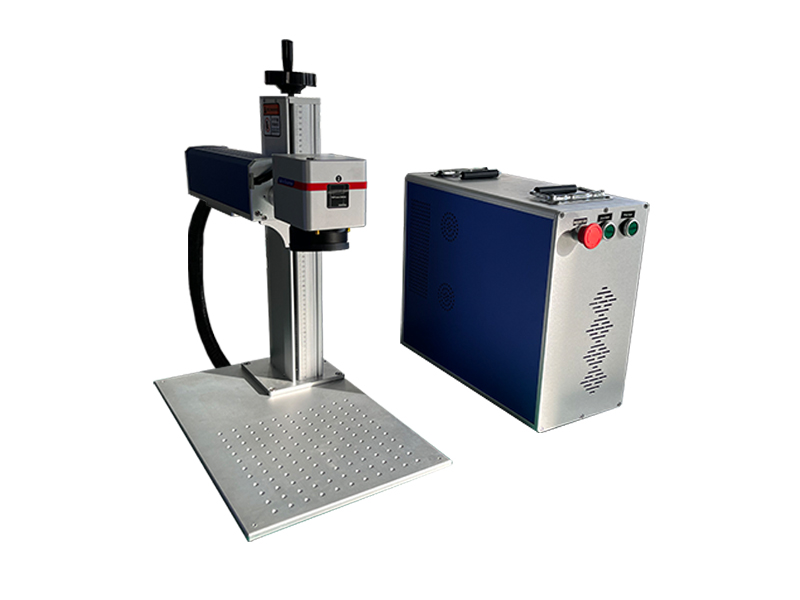
The KM-F30M MOPA Color Laser Marking Machine goes beyond the typical capabilities of standard fiber marking machines. Thanks to its highly adjustable pulse and frequency settings, it excels in producing precise black marks on anodized aluminum and stainless steel. Additionally, it offers color marking options for stainless steel and titanium, along with superior marking quality on delicate non-metallic materials.
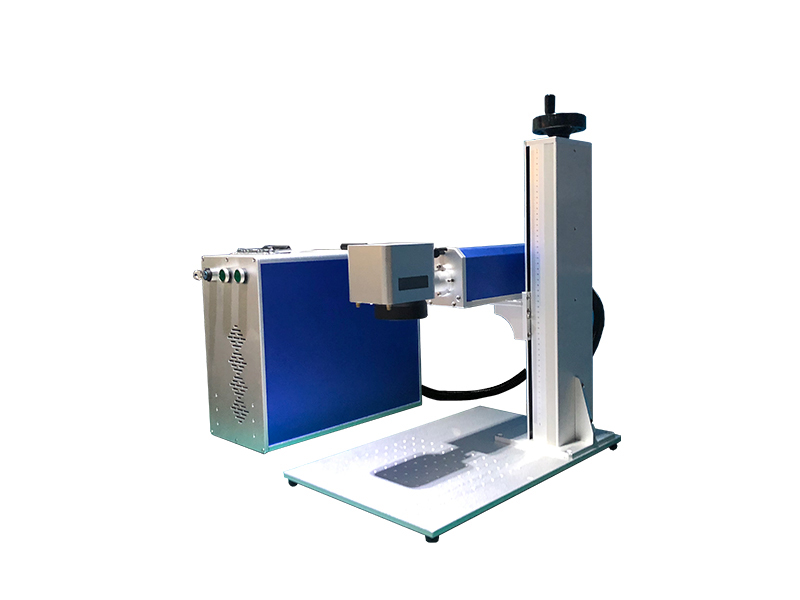
What is a MOPA Color Laser Marking Machine?
When comparing MOPA vs. Q-switched fiber lasers, why upgrading matters? MOPA fiber lasers offer adjustable pulse widths and a wider frequency range. Typically, Q-switched laser marking machines have a fixed pulse width(80-120ns), and a narrow frequency range(20kHz-80kHz). In contrast, MOPA marking machines, such as the KingM MOPA 20W model, provide adjustable pulse widths ranging from 4 to 200ns and a broad frequency arrange from 1.5kHz to 1000kHz, giving you complete control of your marking results.
The Applicable Materials for MOPA Color Laser Marking machine
1. Reducing Material Deformation
When using a laser to remove paint from a thin workpiece, the Q-switched fiber laser often generates excessive heat, causing the reverse side to deform and creating thermal distortion. Adjusting the pulse width settings with the MOPA laser, the laser beam stays on the material for a shorter time. This increases marking speed, reduces residual heat, and minimize the risk of forming material deformation.
2. Dark Marking on Anodized Aluminum
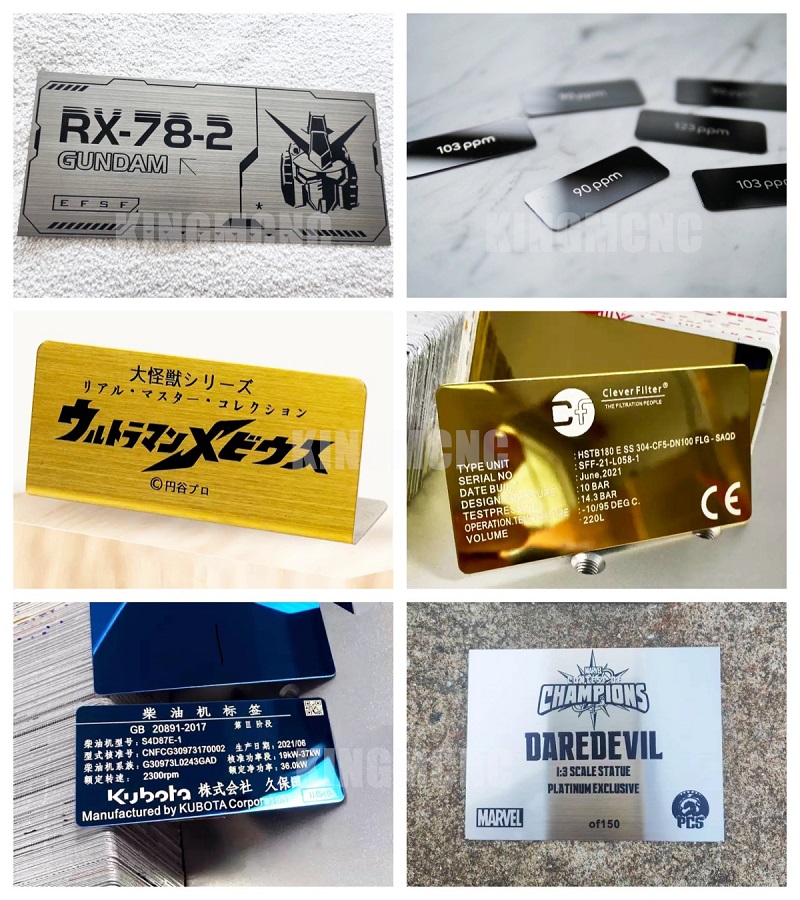
Thanks to MOPA laser's narrow pulse and high-frequency adjustment, the MOPA laser delivers high-contrast black marks on anodized aluminum. Even beginners can easily adjust the parameters to achieve a wide range of grayscale effects, making it ideal for engraving logos, barcodes, serial numbers and QR codes directly onto the material surfaces without damaging the anodized layer.
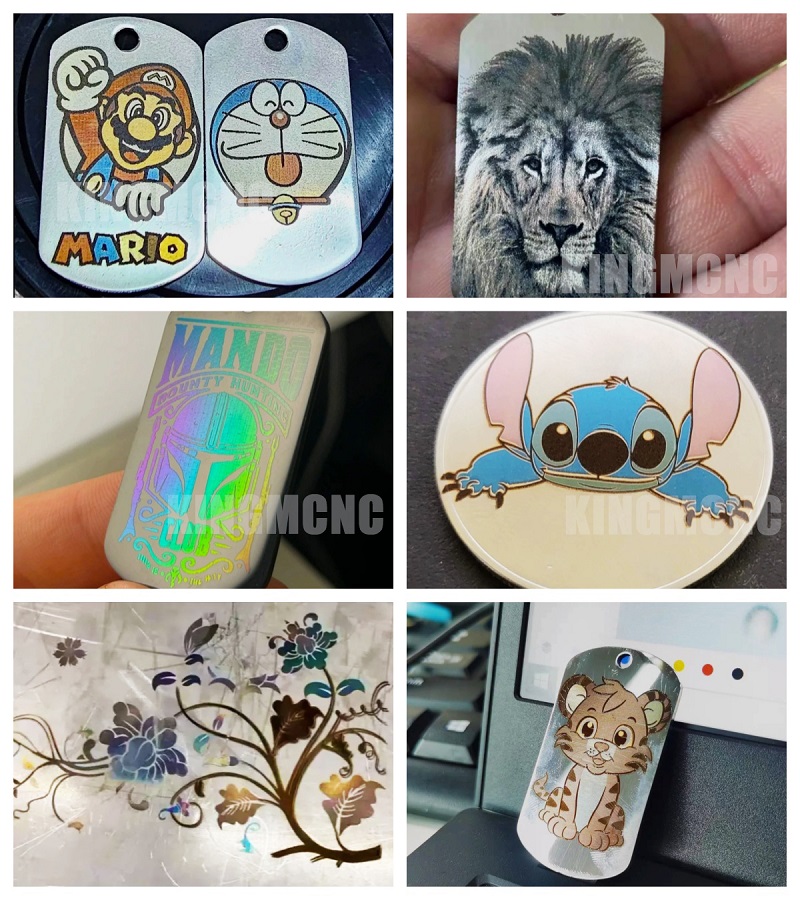
3. Vibrant Color Marking on Stainless Steel and Titanium
Producing vivid, consistent colors on stainless steel or titanium requires precise control. With the KingM CNC MOPA laser, the color variation is driven by the single-pulse energy and laser parameters. The best color marking results are achieved using small to medium pulse widths and high frequency settings, which determines the laser spot overlap rate. By allowing operators to adjust the pulse width and frequency completely and independently, fine-tuning one parameter won’t impact the others. This independent control allows a massive spectrum of repeatable color marking possibilities that a standard Q-switched fiber laser cannot achieve.
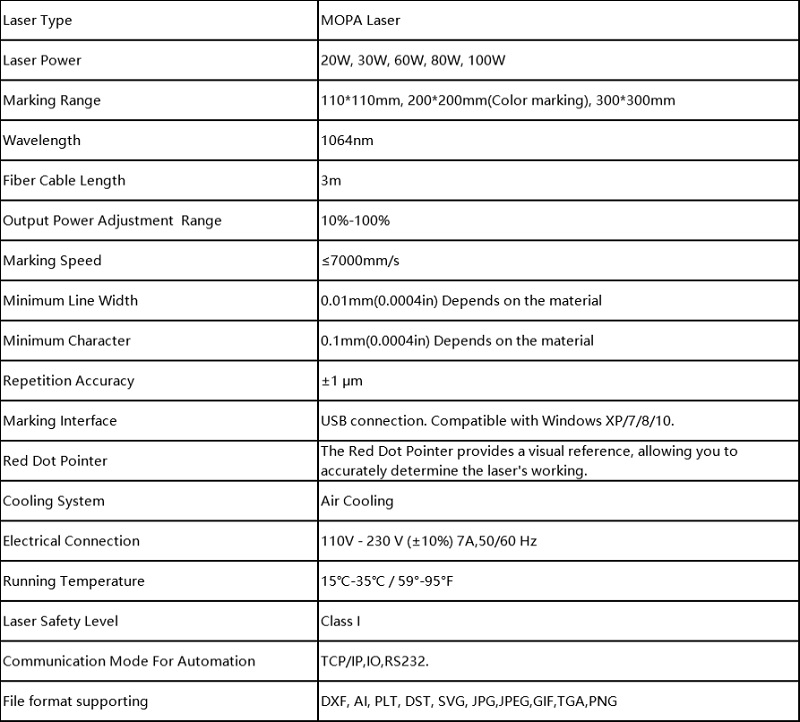
Technical Specs Of MOPA Color Laser Marking Machine
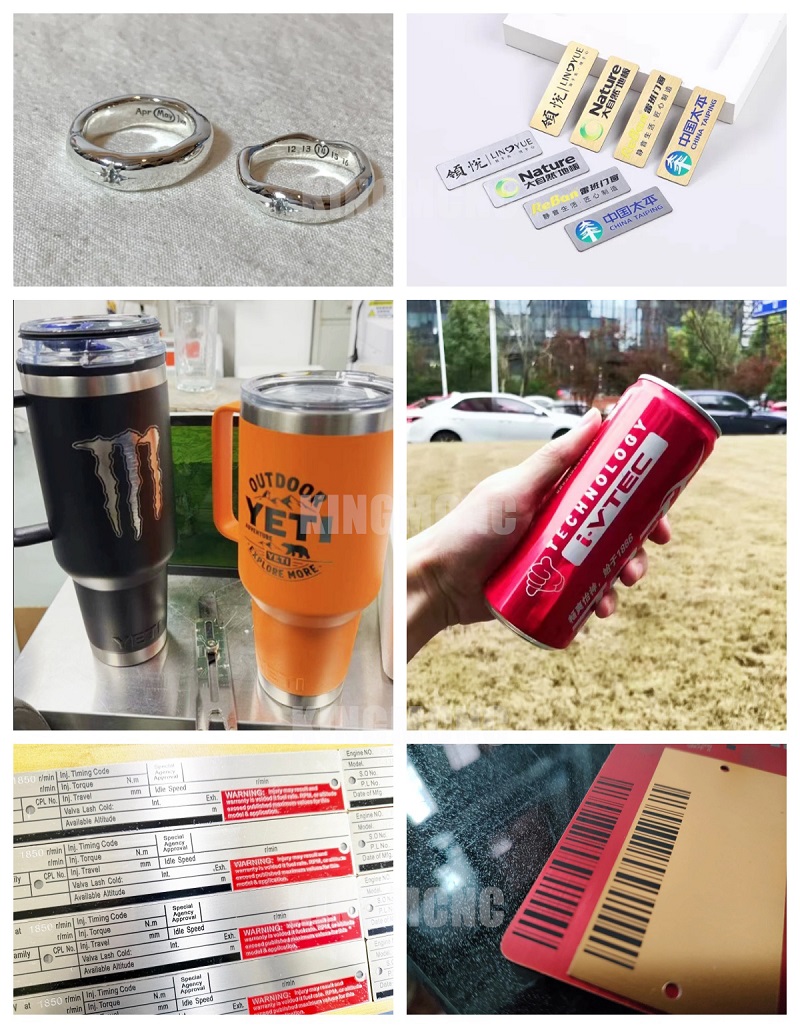
Engraving Custom Nameplates Projects By MOPA Color Laser Engraving Machine
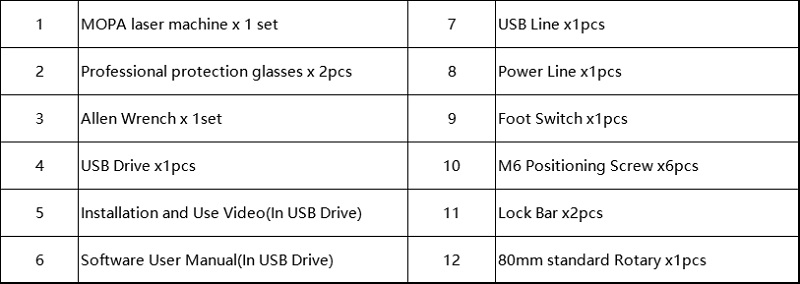
What Accessories Are Included with the MOPA Color Laser Marking Machine?